spclinichennur@gmail.com
Phone : +918095306888
LOW BACK PAIN TREATMENT
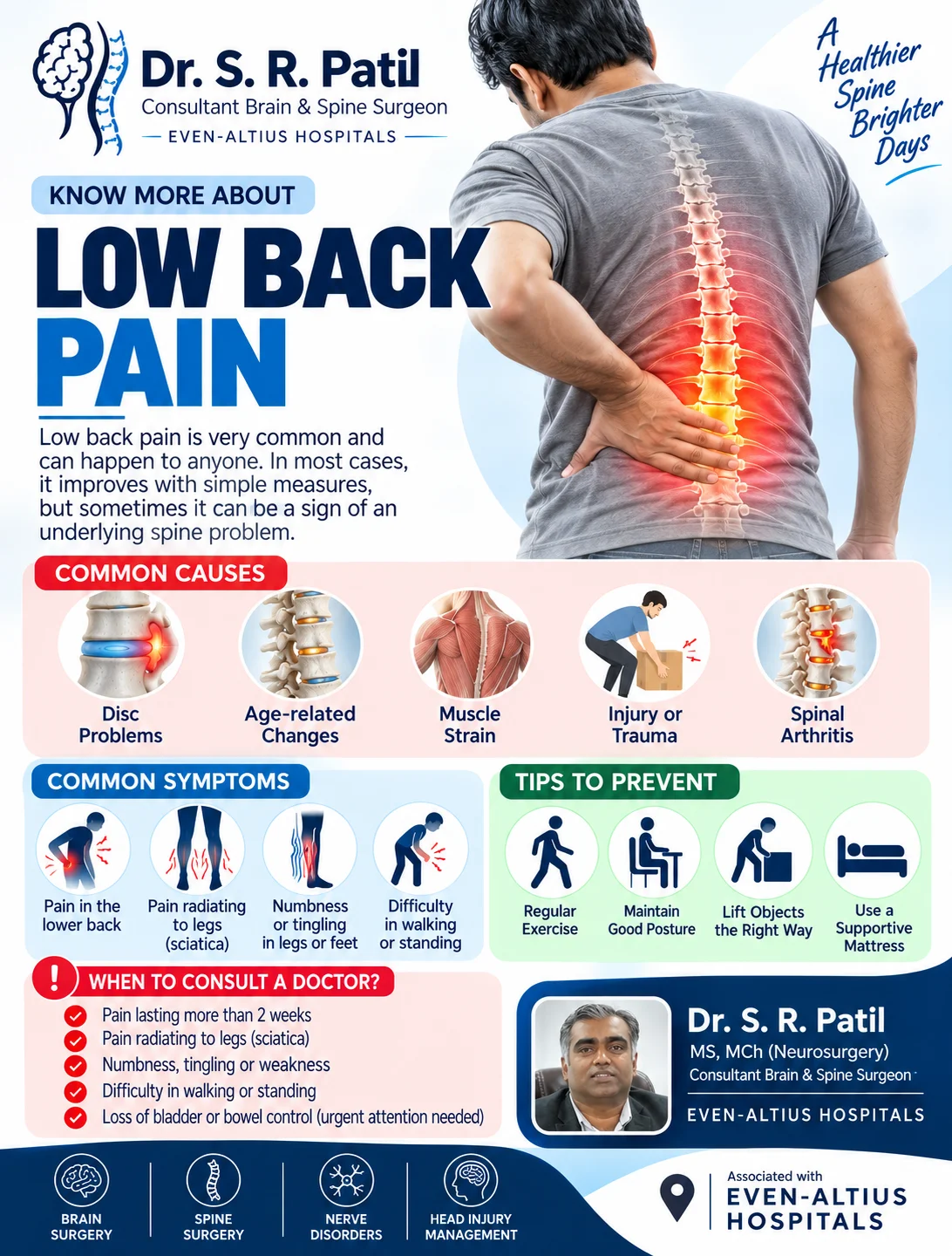
Understanding Low Back Pain: Causes, Symptoms, Prevention and When to Consult a Spine Specialist
Low back pain is one of the most common musculoskeletal complaints and can affect people across different age groups. It may develop gradually because of lifestyle and age-related changes, or it may occur suddenly following an injury, strenuous activity or incorrect lifting.
In many people, back pain improves with appropriate conservative measures. However, persistent pain, pain associated with neurological symptoms, or symptoms that interfere significantly with walking and daily activities may require medical evaluation.
Understanding the possible causes and warning signs can help people seek appropriate care at the right time.
What Causes Low Back Pain?
Low back pain can have several possible causes. Some common factors include:
1. Disc Problems
The discs between the vertebrae act as cushions and help the spine absorb movement and load. Changes in these discs can sometimes contribute to back pain. A herniated or slipped disc may also irritate or compress a nearby nerve, potentially causing pain that travels into the leg.
2. Age-Related Spinal Changes
As we grow older, normal changes can occur in the discs, joints and other structures of the spine. These changes may contribute to stiffness and discomfort and, in some individuals, can contribute to conditions such as spinal stenosis or degenerative changes.
3. Muscle Strain
Sudden movements, excessive physical activity, incorrect lifting techniques or repetitive stress can strain muscles and other soft tissues around the lower back.
4. Poor Posture and Prolonged Sitting
Spending long periods sitting, particularly with poor posture, may place additional stress on the muscles and structures supporting the spine. Regular movement and maintaining appropriate posture can help reduce unnecessary strain.
5. Spinal Arthritis
Degenerative changes affecting the joints of the spine may contribute to stiffness and pain. Symptoms can vary depending on the structures involved and the severity of the condition.
6. Injury or Trauma
Falls, sports injuries, road traffic accidents and other forms of trauma can cause injuries involving the muscles, discs, vertebrae or other spinal structures.
What Symptoms Can Accompany Low Back Pain?
The symptoms can vary depending on the underlying cause.
Common symptoms may include:
- Pain or aching in the lower back
- Stiffness in the lower back
- Pain that radiates into the buttock or leg
- Burning, shooting or electric-like pain
- Numbness or tingling
- Weakness in the legs
- Difficulty walking or standing for prolonged periods
When a spinal nerve is irritated or compressed, symptoms may extend beyond the back and into the leg. This is commonly referred to as sciatica when the sciatic nerve distribution is involved.
How Can You Protect Your Spine?
Several everyday habits can support spinal health:
Stay Physically Active
Regular, appropriate physical activity can help maintain strength and mobility.
Maintain Good Posture
Pay attention to your posture while sitting, standing and working. If you work at a desk, ensure that your workstation is arranged comfortably and take regular movement breaks.
Use Correct Lifting Techniques
When lifting objects, avoid sudden twisting movements and use appropriate technique. For heavier objects, seek assistance rather than attempting to lift them alone.
Maintain a Healthy Weight
Maintaining a healthy body weight can reduce the physical load placed on the musculoskeletal system.
Avoid Prolonged Inactivity
Remaining in one position for long periods may contribute to stiffness. Regular movement throughout the day can be beneficial.
🚨 When Should You Consult a Spine Specialist?
Not every episode of back pain requires specialist treatment. However, medical evaluation is particularly important when symptoms are persistent, severe, recurrent or accompanied by neurological changes.
Consider consulting a doctor if you experience:
- Persistent or worsening back pain
- Pain radiating into the legs
- Numbness or tingling
- Weakness in the arms or legs
- Difficulty walking or standing
- Back pain following significant trauma
- Symptoms that interfere substantially with everyday activities
Seek urgent medical attention if severe back symptoms are accompanied by new loss of bladder or bowel control or significant neurological changes.
These symptoms can require prompt assessment.
Does Every Back Pain Problem Require Surgery?
No. Treatment depends on the underlying cause, severity of symptoms, examination findings and other individual factors.
Depending on the condition, management may include activity modification, medication, physiotherapy, exercise-based rehabilitation or other conservative approaches. Some patients with specific spinal conditions may require procedures or surgery when clinically indicated.
A proper clinical evaluation is therefore important before deciding on treatment.
Consult a Spine Specialist for Persistent Symptoms
Back pain can have many different causes, and the appropriate treatment depends on identifying the underlying problem.
Dr. S. R. Patil
MS, MCh (Neurosurgery)
Consultant Brain & Spine Surgeon
EVEN-ALTIUS HOSPITALS
If back pain is persistent, recurrent, associated with leg symptoms or affecting your ability to perform everyday activities, an appropriate medical evaluation can help determine the next step.
Tag
LOW BACK PAIN SPECIALIST IN HENNUR SPINE SPECIALIST IN HENNUR NEUROSURGEON IN HENNURBRAIN AND SPINE SURGEON IN HENNUREnquiry
Get in touch


S P CLINIC.All Rights Reserved © 2026